
Our Children Can Handle Real History - Start With the Books that Respect Their Intelligence


What happens when we stop saving the serious stories of history for much later and start introducing children to real people who changed the world?
I didn’t set out to raise a little history enthusiast. My son developed that interest through stories, one book leading to another, until history became something he genuinely wanted to explore.
When he was around four and a half or five, a friend recommended a historical book for children. It was full of real events, complicated motives, intrigue, and the kinds of details that make history fascinating, but presented in a way a young child could follow. As soon as we started reading, he didn’t want to hear anything else.
That book opened a door.
I began looking for more books like it. I quickly discovered that finding a children’s history book that respects both the facts and the child’s intelligence can feel like finding treasure. And when we found one, it was exciting for both of us.
But something else happened that I hadn’t anticipated: my son began finding his heroes in real history.
Real people can be extraordinary heroes
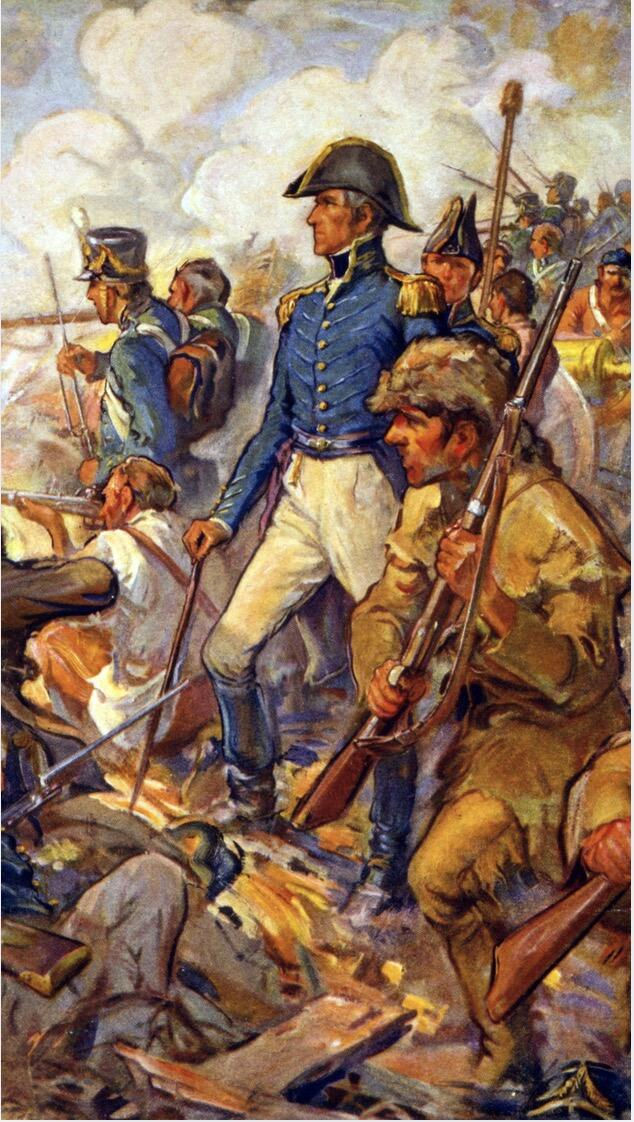
I have nothing against superheroes. There is plenty of room for Batman and Superman in childhood. But there is something uniquely powerful about discovering that real people have faced danger, endured hardship, defended their beliefs, and stood up for others.
Real heroes had families they loved. They felt fear. They faced rejection and uncertainty. Some made enormous sacrifices for a cause they believed was worth defending.
These are the stories I want my children to know.
I want them to understand that bravery doesn’t mean feeling no fear. It means doing what you believe is right even when you’re frightened. I want them to discover that ordinary people can accomplish extraordinary things, sometimes without knowing whether their efforts will succeed.
And I don’t believe children need to wait until middle school to begin thinking about these things.
They need stories they can understand, adults who are willing to talk with them, and the freedom to ask questions. We can leave out graphic details without removing the truth, the stakes, or the human emotions that make a historical event meaningful.
That is where a good historical book becomes so much more than a book.
How historical stories prepared my son for a real piece of history

October 23 is an especially meaningful date in my family. It marks the beginning of the Hungarian Revolution of 1956, when Hungarians rose against communist dictatorship and Soviet control. We just commemorated its 70th anniversary.
As a Hungarian mother, I want my children to understand not only where their family comes from, but also the history that shaped our country.
When I recently explained the revolution to my son, I could see how much groundwork our earlier reading had already laid. He was able to follow the reasons people protested, the courage it took to stand up to a powerful regime, and the terrible risks people faced.
I explained that the people involved weren’t storybook characters who knew how everything would turn out. They were ordinary people who had to make difficult choices in frightening circumstances.
I spared him the brutal details that weren’t necessary for his age, but I didn’t make the event meaningless by removing its seriousness.
What struck me most was how he began connecting the pieces. His previous encounters with historical figures, freedom struggles, and difficult decisions had given him a foundation for understanding a much bigger story.
He asked thoughtful questions, considered the choices people made, and began to see why this event matters beyond a single date in a history book.
Of course, every child is different, and one child’s readiness doesn’t establish a universal age for difficult history. But the experience reminded me not to underestimate what a young child can understand when we give them the right introduction.
Sometimes we wait for children to be old enough for history when what they really need is a better way into it.
Historical books for children who are ready for real stories
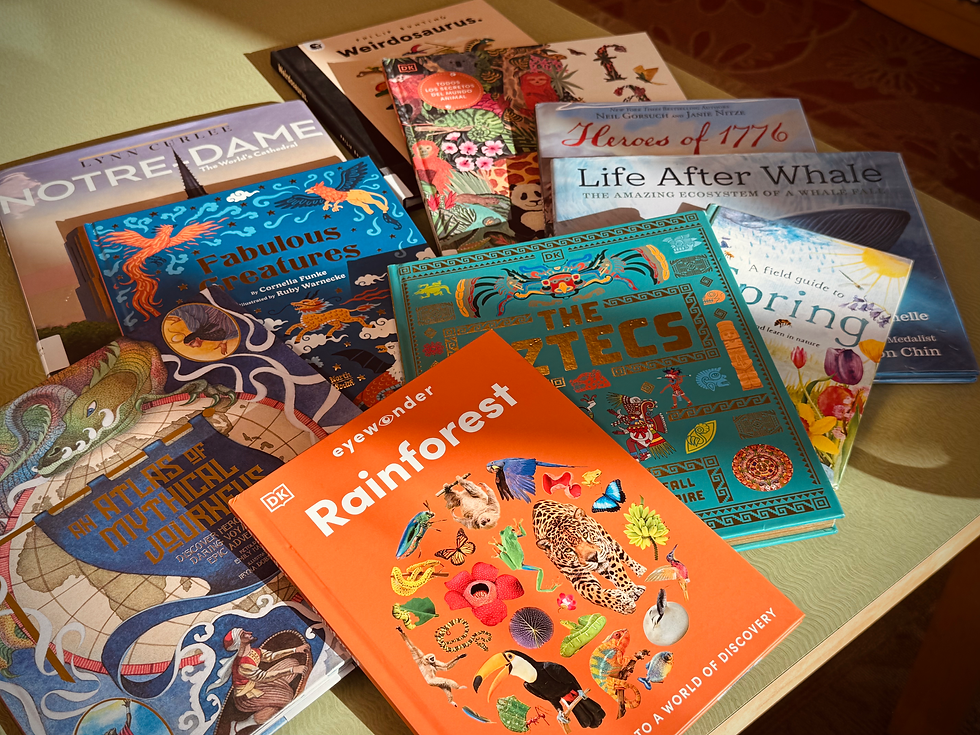
These are titles I would look for when building a home library of historical heroes. I’ve favored narrative biographies, substantial picture books, and illustrated nonfiction that introduce real people and meaningful events rather than relying on shallow summaries.
Some are excellent read-alouds for younger children; others are better for independent readers or older children. Always preview sensitive subjects for your particular child.
Books about American courage, freedom, and standing up for what’s right

A classic introduction to the events that led to American independence. Its clear narrative makes it a good starting point for younger children learning why Americans celebrate Independence Day.
An engaging, illustrated account of the people who helped bring American independence to life. A wonderful starting point for discussing courage, sacrifice, liberty, and the founding of a nation.
Meet John Adams and Thomas Jefferson through an engaging, illustrated account of two very different men who helped shape the American Revolution. It's an approachable way to introduce children to the personalities behind the founding of the United States.
Based on the true story of a Massachusetts woman who organized a group of women to guard their community during the American Revolution. It offers an exciting example of courage, initiative, and service to one's neighbors.
This story introduces children to Sybil Ludington, a teenager who rode through the night to warn American forces of approaching British troops. It's a memorable example of bravery and responsibility in a time of war.
In this installment of the Magic Tree House series, Jack and Annie travel back to the American Revolution and encounter George Washington. It's a good option for children who enjoy adventure stories and are beginning to explore historical events.
For families who want to explore beyond a single story, this illustrated history combines real people and events with activities. It covers the struggle for independence and the challenges involved in creating a new nation.
Explorers, inventors, and people who changed what was possible

On a Beam of Light: A Story of Albert Einstein - Jennifer Berne, illustrated by Vladimir Radunsky
This biography follows Einstein’s curiosity and his habit of asking questions about the world. It is especially appealing for children who love big ideas and need to see that curiosity itself can be a remarkable strength.
The Watcher: Jane Goodall’s Life with the Chimps - Jeanette Winter
Jane Goodall’s story shows how patient observation, curiosity, and determination can lead to important discoveries. It is a wonderful choice for children who love animals and nature.
Six Dots: A Story of Young Louis Braille - Jen Bryant, illustrated by Boris Kulikov
Louis Braille’s determination to make reading accessible to blind people gives children a concrete example of how one person’s invention can change countless lives.
The story of the curious French boy who became a pioneering underwater explorer and helped develop equipment for exploring beneath the sea.
First Flight: The Story of Tom Tate and the Wright Brothers - by George Shea (Author), Don Bolognese (Illustrator)
When Tom Tate hears that Wilbur and Orville Wright are building a flying machine, he can't wait to try it. Tom's dad thinks it's dangerous. Some people think the Wrights are crazy. Can Tom help the brothers get their dream off the ground?
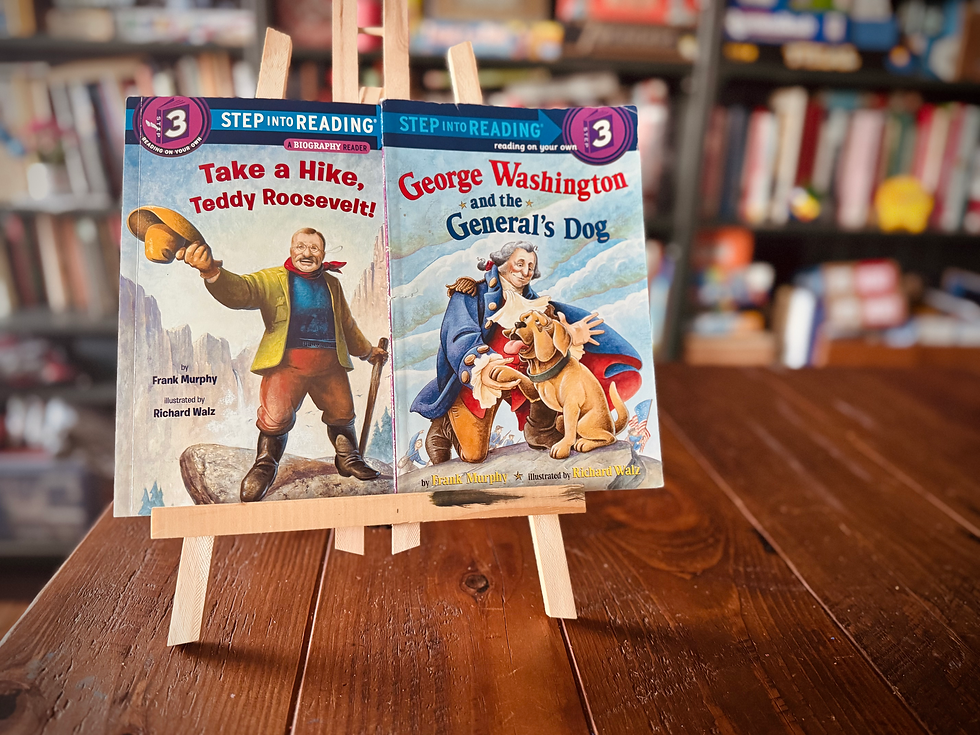
Brave Clara Barton - by Frank Murphy (Author), Sarah Green (Illustrator)
This biography follows Clara Barton as she helps her brother recover from a terrible injury, overcomes her timidity, and works as a teacher, and finally fights her way to the front lines of the Civil War, where she helps soldiers wounded in battle, and later on establishes the American Red Cross.
Leaders, patriots, and people who shaped nations

The remarkable story of the young French heroine who led troops during the Hundred Years' War. A strong choice for courage, faith, and duty.
Mahatma Gandhi’s grandson tells the story of how his grandfather taught him to turn darkness into light in this uniquely personal and vibrantly illustrated tale that carries a message of peace.
An illustrated account of the Macedonian king whose military campaigns spread Greek influence across a vast region. A useful starting point for discussing ambition and leadership.
This series introduces children to influential American leaders and historical figures through engaging biographies centered on freedom, character, and achievement. It's a promising resource for families who want to build a home library of real-life heroes.
A wide-ranging introduction to American presidents, offering a way to explore leadership, character, and the decisions that shaped the nation. It's especially useful for children who enjoy comparing historical figures rather than reading about them one at a time.
People who faced difficult times and made a difference

Edison’s life introduces children to invention, experimentation, and persistence. Look for an illustrated edition if your child is more engaged by visual storytelling than by blocks of text.
The Story of Anne Frank - multiple children’s editions available
Anne Frank’s life can help older or carefully prepared younger children begin to understand the human consequences of persecution during the Holocaust. Choose a historically responsible edition that fits your child’s readiness, and read it together rather than treating it as a simple tale of inspiration.
During the Berlin Airlift, American pilot Gail Halvorsen dropped little parachutes carrying sweets for children in a city facing shortages. A story of kindness during hardship.
Helen's Big World: The Life of Helen Keller Helen Keller learned to communicate despite being deaf and blind from early childhood, then became an author and advocate. A classic story of determination and education.
A note about choosing the right edition
Not every book on this list has the same reading level or approach. Some are picture-book biographies, while others tackle difficult history or offer a more substantial account.
Before buying, I recommend checking the preview, illustrations, reading level, and recent reader reviews. For a child who enjoys serious historical detail, a well-written, fact-rich picture book may be a better choice than a simplified book with lots of cartoon graphics but little context.

Also, once the kiddo is ready to read on his or on her own, you can start handing them president's biography books on their reading level. Check this out:
You don’t have to be a history expert to begin
One thing I’ve learned is that I don’t need to know everything about a historical figure before introducing that person to my child.
If there is a holiday coming up, or my son suddenly wants to know about medieval knights, a freedom fighter, or life under communism, I can spend half an hour reading and preparing. Then the book does much of the work for us.
If his interest grows, I can find a longer biography, consult additional sources, or explore the wider historical context. We don’t have to learn everything in one sitting.
Over time, this approach has helped us build a little library of books I can reach for whenever a question arises. The more I discover, the more I realize how many extraordinary stories are waiting to be found.
I encourage you to start your own collection. You don’t need twenty books to begin. One carefully chosen book, read with interest and followed by an honest conversation, can be enough to open a door.
Let your child follow a question. Introduce a person who stood for something important. Tell the story behind a national holiday. Allow children to encounter the difficult parts of history in ways they can understand.
Our children don’t need to wait until they are older to meet real heroes. They need opportunities to discover what courage looks like, what freedom means, and what ordinary people can do when they believe something matters.
And sometimes, all it takes to begin is one good book.
Affiliate disclosure: This post may contain affiliate links. If you purchase through them, I may earn a commission at no additional cost to you. I recommend choosing books based on your child’s interests, reading level, and readiness for the subject.

Comments