.png)
The 24 Books Every Teen Should Read Before They Turn 18 (And Why Most Kids Never Get To)

Out of the millions of books in the world, there's a small, tested handful that keep showing up — in classrooms, in conversations, in the background of nearly every well-read adult you've ever admired. These aren't obscure. They're not trendy. They're the books that, once read, quietly become part of how a person thinks, argues, and sees the world.
If your teen reads these between the ages of 14 and 18, something happens that's hard to schedule any other way: their taste in literature gets calibrated. They develop a sense — almost a gut instinct — for what "good" is. Years from now, in a job interview, at a dinner party, in a college seminar, they'll recognize a reference to Winston Smith or Captain Nemo or the Count of Monte Cristo, and they'll have something real to say about it. That's not trivia. That's cultural fluency, and it's very hard to build after the fact.
This matters especially if you're homeschooling. You get to choose the canon your child grows up with, instead of hoping a crowded public school curriculum gets to all of it (it usually doesn't, and when it does, it's often rushed). Where I'm from, most of these books were simply required reading — not because a bureaucrat decided so, but because generations of teachers agreed they were too good to skip. I don't love the word "mandatory." These books don't need to be forced on anyone. They earn their place.
Below is a working list of 24 books I'd put in front of any teenager, regardless of whether they're headed toward literature, engineering, medicine, or anything else. Great stories aren't a detour from a "practical" education — they're part of the foundation underneath it. A table with quick recommendations and purchase links is at the end if you want to jump straight to building a reading list.
---
Adventure, Courage, and Consequence

A young Gascon named d'Artagnan arrives in Paris chasing a place in the King's Musketeers, and instead finds himself dueling, then allying with, three of the finest swordsmen in France. What follows is a story about loyalty, honor, and the kind of friendship that survives betrayal, political scheming, and the fearsome Cardinal Richelieu. It's simply one of the best adventure stories ever written, and it teaches teens what real camaraderie looks like under pressure.
If your teen hasn't read one true swashbuckling classic yet, start here.

Edmond Dantès is betrayed by jealous friends, wrongly imprisoned, and left to rot in a island fortress — until he escapes and reinvents himself as the immeasurably wealthy Count of Monte Cristo, engineering an elaborate revenge on the men who ruined him. It's a masterclass in patience, justice, and the cost of letting revenge consume a life. Few books make a 1,200-page count feel like it's over too soon.
This is the book most adults wish they'd read at 16 instead of 30.

Tom Sawyer is mischievous, clever, and allergic to boredom, whitewashing fences, faking his own funeral, and hunting for buried treasure along the Mississippi with his friend Huckleberry Finn. Twain's humor and eye for small-town American life make this a gentler entry point before tackling heavier classics. It's often the first "real" classic a young reader finishes and loves.
A perfect on-ramp for a reader who isn't sure they like "classics" yet.

A group of schoolboys are shipwrecked on a deserted island with no adults at all, and have to build a working society from scratch — rationing food, assigning jobs, and resolving conflicts before they tear each other apart. It's often read as the more hopeful counterpart to Lord of the Flies, showing what young people can accomplish through cooperation instead of collapse.
A great pairing read right before or after Lord of the Flies. (See below on this list.)

Professor Lidenbrock and his nephew Axel follow a cryptic Icelandic manuscript down into a volcanic crater, descending into a hidden underground world of ancient seas, giant fungi, and prehistoric creatures. It's scientific curiosity turned into pure adventure, and it plants a very specific kind of wonder in a young reader's head.
Ideal for the teen who loves science as much as story.

Captain Nemo pilots the submarine *Nautilus* through the ocean's depths, torn between scientific genius and a deep, simmering anger at the surface world he's abandoned. Verne predicted submarine technology decades ahead of its time, and Nemo remains one of literature's most fascinating, morally complicated characters.
One of the most quietly influential science fiction characters ever written.

Young Jim Hawkins finds a pirate's treasure map and sets sail with a crew that includes the unforgettable Long John Silver — a man who might be an ally, or might be planning a mutiny the entire time. This is the book that basically invented the modern pirate archetype: the parrot, the peg leg, the "X marks the spot." Every pirate story since owes it a debt.
If your teen has never read the original pirate story, this is it.

Shipwrecked alone on a remote island for nearly three decades, Crusoe has to rebuild civilization from nothing — food, shelter, tools, sanity — using only what he can salvage and what he can learn. It's one of the earliest novels in the English language and still one of the most compelling studies of self-reliance ever written.
A quiet lesson in resourcefulness your teen will actually enjoy reading.
Society, Power, and Human Nature

A group of British schoolboys, stranded on an island with no adults, slide from order into savagery with unsettling speed. Golding's point isn't that kids are bad — it's that civilization is a thin, fragile agreement, and it's worth knowing that before you're an adult navigating groups, power, and peer pressure yourself.
One of the most important conversations you'll have with your teen all year.

Winston Smith lives under a totalitarian government that rewrites history, monitors private thought, and punishes independent thinking as a crime. It's the book that gave us "Big Brother," "doublethink," and "thoughtcrime" — terms teens will hear referenced for the rest of their lives, in the news, in class, in casual conversation, whether or not they've read the source.
Arguably the single most-referenced novel in modern political conversation.
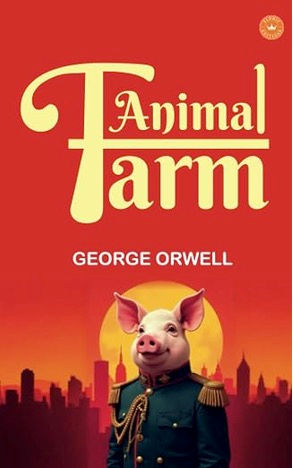
The animals of Manor Farm overthrow their human owner to build an equal society, only to watch the pigs in charge become exactly the tyrants they replaced. It's short, sharp, and one of the clearest illustrations of how power corrupts ever put into fiction — a perfect companion to *1984*.
A one-sitting read with a lesson that sticks for life.

Huck fakes his own death and rafts down the Mississippi with Jim, an enslaved man escaping toward freedom, and the two form a bond that quietly dismantles everything Huck's been taught about right and wrong. Often called the great American novel, it's Twain at his sharpest — funny, uncomfortable, and unflinching about American history.
A tougher, richer read for after Tom Sawyer.
---
The Sea, the Wild, and the Self

Captain Ahab hunts the white whale that took his leg, dragging his crew into an obsession that consumes the entire voyage. It's a novel about the danger of fixating on one thing until it swallows everything else — and it contains some of the most striking prose in the English language.
Dense, yes — but it rewards a patient teenage reader for life.

Lemuel Gulliver washes ashore among six-inch-tall people in Lilliput, then later among giants, then among talking horses more rational than any human he's met — each stop a sly satire of politics, science, and human vanity. It's disguised as a children's adventure and is actually one of the sharpest satires ever written.
Teaches teens to spot satire — a skill they'll use for the rest of their lives.

Wilfred of Ivanhoe returns from the Crusades to find England torn between Saxon and Norman loyalties, and gets pulled into tournaments, sieges, and the fate of the outlaw Robin Hood along the way. Scott essentially invented the modern historical novel with this one, and its influence on knights-and-castles storytelling is still visible everywhere today.
The book behind almost every medieval adventure story that came after it.

Quasimodo, the deformed bell-ringer of Notre-Dame, falls for the kind-hearted Esmeralda, setting off a tragedy involving obsession, prejudice, and one of literature's great symbols of the outsider looking in. Hugo's Paris is as much a character as anyone in the cast, and the book's compassion for its "monster" still lands hard.
A powerful lesson in looking past appearances.

An aging man reads so many chivalric romances that he loses his grip on reality, renames himself Don Quixote, and sets off with his loyal squire Sancho Panza to revive knighthood — tilting at windmills along the way. Widely considered the first modern novel, it's also one of the funniest and most tender books ever written about the gap between dreams and reality.
Often cited as the birth of the novel as we know it.

Old Shatterhand and his Apache blood-brother Winnetou track a gang of outlaws across the American West toward a hidden treasure, in one of the most beloved adventure novels in European literature. Karl May's Wild West, though written from a German desk, shaped generations of readers' sense of frontier honor and friendship across cultural lines.
A beloved classic in Europe that deserves a wider audience.
---
Endurance, Character, and the Long View

Frodo Baggins is handed a ring of terrible power and a near-impossible task: destroy it before it destroys everyone he loves. It's the book that essentially created the modern fantasy genre, and its themes — small people doing hard things, friendship carrying you further than strength ever could — are as relevant to a teenager as to a wizard.
The single most influential fantasy epic of the last century.
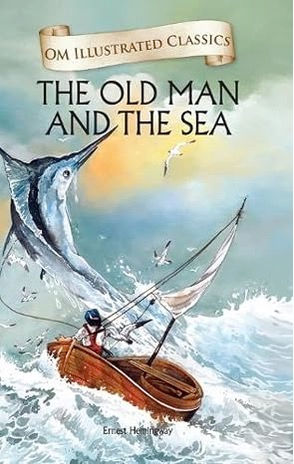
An aging fisherman named Santiago hooks the biggest catch of his life, then spends days locked in a battle of will against it, far from shore and far past the point most people would give up. Hemingway strips the story down to almost nothing but grit, and that's exactly why it hits so hard.
Short enough to read in an afternoon, deep enough to think about for years.

Buck, a domesticated dog, is stolen from a comfortable California home and sold into the brutal world of the Klondike Gold Rush, where he must rediscover the wild instincts underneath his tame upbringing. It's a story about resilience and returning to something primal in yourself — a theme that lands differently, and more usefully, at 16 than at 30.
One of the most re-readable short novels in American literature.
---
Love, Class, and Growing Up

Jane Eyre by Charlotte Bronte chronicles the story of an orphaned girl named Jane, who suffers a difficult upbringing under her merciless aunt and then at a rigorous boarding school. She falls in love with the enigmatic and gloomy Mr. Rochester as an adult governess at Thornfield Hall. After learning Rochester's sinister secret—his mad wife stashed in the attic—Jane leaves Thornfield in pursuit of autonomy. Eventually, Jane goes back to a modest and now single Rochester and discovers equality and love in their marriage.

Elizabeth Bennet meets the proud, wealthy Mr. Darcy and immediately can't stand him — which of course means Austen has several hundred brilliant pages to spend proving both of them wrong. It's razor-sharp about class, first impressions, and the gap between how people appear and who they actually are, all wrapped in some of the wittiest dialogue in English literature.
Possibly the funniest classic on this entire list.

Hans Castorp visits his cousin at a Swiss tuberculosis sanatorium for three weeks and ends up staying for seven years, drawn into long philosophical debates about time, illness, love, and the state of Europe just before World War I. It's slower and more demanding than everything else on this list, which is exactly why it's worth saving for the older end of the 14–18 range.
The most challenging book here — save it for junior or senior year.
---
Build the Shelf Now, Thank Yourself Later
None of these books need to feel like homework. Pick one or two a semester, read some of them together as a family, and let your teen's opinions about them be real — even if they disagree with you about which ones are actually good. That disagreement is the whole point. It means they're building real literary taste instead of borrowing yours.
The table below has all 24 books in one place, with a quick recommendation for each and a direct link to buy. Bookmark it, print it, or turn it into next year's reading list.
Full List of Mentioned Books
Book Title | Why Recommended |
Teaches loyalty, honor, and camaraderie under pressure; a great first swashbuckling classic | |
A masterclass in patience, justice, and the cost of revenge | |
Gentle, funny on-ramp for readers not yet sold on "classics" | |
Hopeful counterpart to Lord of the Flies; shows what cooperation can build | |
Turns scientific curiosity into pure adventure | |
Features Captain Nemo, one of literature's most complex characters; ahead-of-its-time sci-fi | |
The original pirate story; invented the modern pirate archetype | |
A quiet, enjoyable lesson in self-reliance and resourcefulness | |
Shows how fragile civilization can be — an important conversation starter | |
Arguably the most-referenced novel in modern political conversation | |
Short, sharp illustration of how power corrupts; pairs well with 1984 | |
Twain at his sharpest; unflinching look at American history and morality | |
A dense but rewarding study of obsession consuming everything else | |
Teaches teens to spot satire — a lifelong useful skill | |
Essentially invented the modern historical novel | |
A powerful lesson in looking past appearances | |
Widely considered the first modern novel; funny and tender | |
A beloved European classic deserving wider readership | |
The most influential fantasy epic of the last century | |
Short but deep; strips storytelling down to grit and will | |
A resilient, re-readable story that lands differently at 16 than at 30 | |
A story of autonomy, resilience, and eventually finding equality in love | |
Possibly the funniest classic on the list; razor-sharp on class and first impressions | |
The most challenging book on the list; best saved for older teens |
Comments