.png)
Yoto vs. Toniebox: The Best Screen-Free Audiobook Players for Kids in 2026

Quick Picks (For the Skimmers)
Rank | Player | Best For | Amazon Link |
🥇 #1 Overall Pick | Yoto Player | Ages 3–12+, homeschoolers, growing kids | |
🥈 Runner-Up | Toniebox | Toddlers ages 1–5, sensory play | |
💰 Best Bundle | Yoto Player + Starter Pack | Families who want everything in one box |
Affiliate disclosure: This post contains Amazon affiliate links. If you click through and make a purchase, I may earn a small commission at no extra cost to you. I only recommend products I'd genuinely put in front of my own kids — every pick below has a 4.5-star average rating or higher on Amazon at the time of writing.
Why Every Family Needs a Screen-Free Audiobook Player

Here's the thing nobody tells you when you become a parent: you cannot be "on" every single second of the day. You can't always be the one reading aloud, and your kids can't always read to themselves — some of them aren't old enough yet, some just don't want to, and honestly, sometimes you just want to drink your coffee in peace without any guilt attached to it.
That's where a screen-free audio player earns its keep. It's not a screen replacement that numbs kids out — it's a book replacement that keeps their imagination fully engaged, just through their ears instead of their eyes.
A few ways these little players actually get used in real life:
In the car on the way to school or on a road trip, instead of a tablet
At bedtime, so a story can keep going even after you've said goodnight
On hikes, picnics, and long walks — genuinely popular with families who want kids unplugged outdoors
During quiet time or independent play, so you can make dinner, answer an email, or just sit down for five minutes
As a homeschool tool, filling in read-aloud time when you don't have the bandwidth to come up with "one more activity"
And it's not just a break for parents — it's genuinely good for kids. Listening to well-narrated stories builds vocabulary, exposes kids to sentence structures and expression they wouldn't get from a screen, and (if you're intentional about which cards you pick) builds real literary taste over time.
It also happens to be one of the best gift ideas out there: if a friend or family member already has a player, buying them another card is an easy win. If they don't have one, a starter set for a niece, nephew, or neighbor's kid is the kind of gift that gets used constantly and never really gets old, because there's always a new card, a new story, or a "make your own" recording to add.
The Two Market Leaders: Yoto vs. Toniebox

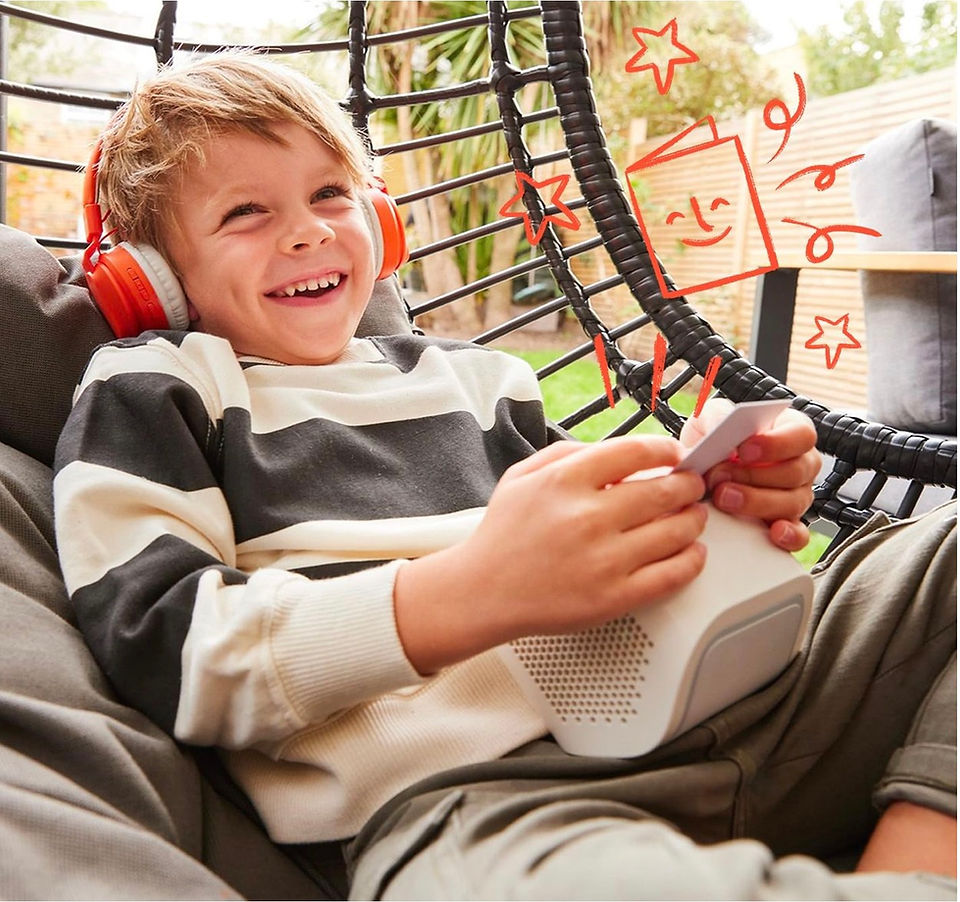

There are really only two serious contenders in the screen-free kids' audio space: Yoto and Toniebox. Both work on the same basic idea — no screen, no ads, no camera, no microphone, physical media instead of a touchscreen menu — but they take pretty different approaches to how a kid actually interacts with the device.
How Yoto Works

The Yoto Player is a cube-shaped speaker with a small pixel-art screen (just for visuals like a clock or animated icon — there's no video, apps, or internet browsing a kid can access). You pop a Yoto Card — a credit-card-sized piece of plastic — into a slot on top, and it starts playing. Pull the card out, it stops. Kids as young as 3 can operate it entirely on their own.
What makes Yoto stand out:
Doubles as a nightlight, OK-to-wake alarm clock, sleep-sound machine, and room thermometer
Cards are compact and hold up well to being tossed in a backpack or car door
A "Make Your Own Card" feature lets you record your own voice reading a bedtime story, or load your own MP3s/podcasts — genuinely useful for homeschoolers building a custom curriculum
Even if a card gets lost, once you've downloaded its content once, it typically stays in your Yoto library
A huge and constantly growing card catalog: audiobooks, music, podcasts, radio, meditation, and more
Want something smaller?
The Yoto Mini is a compact version of the same idea — same card system, same no-screen/no-ads/no-camera design, just shrunk down and lighter, which makes it a great pick for travel bags, car rides, and smaller hands. It runs on the same card catalog as the full-size Player, so you're not giving up any content by going smaller — it's really just a size and portability trade-off, and a nice option if you want a second player for a sibling's room or for on-the-go use without the extra bulk.
How Toniebox Works

The Toniebox is a soft, huggable cube (it genuinely feels more like a toy than a piece of electronics) that's activated by placing a small collectible figurine — a "Tonie" — on top. Tap the ears to change volume, tap the sides to skip. It's about as toddler-proof as this category gets.
What makes Toniebox stand out:

Extremely toddler-friendly — very hard to use "wrong"
Figurines are collectible and character-based (Disney, Sesame Street, Paw Patrol, and originals), which younger kids love handling and lining up
Newer Toniebox 2 adds interactive games via a separate Tonieplay controller
Soft, drop-friendly exterior that survives toddler handling
Why Yoto Comes Out on Top for Us
Both are good products — this isn't a case of one being a scam and one being legit. But when you weigh cost-per-story, how long a kid actually keeps using it, and flexibility, Yoto wins on a few fronts that matter for real families:
Cards are cheaper than figurines, and unlike a Tonie figurine, a lost or damaged Yoto card doesn't necessarily mean you lose the content — it often stays downloaded to your account.
Bigger age range. Toniebox tends to age out with kids around 5–6; Yoto's catalog scales from toddler content all the way up to podcasts and novels for tweens, so one player can last through elementary school instead of being outgrown in a couple of years.
More useful outside of "story mode." The alarm clock, nightlight, and sleep-sound features mean the Yoto earns its spot on the nightstand every single day, not just during story time.
Homeschool flexibility. The Make Your Own Card feature means you can load your own read-alouds, spelling lists, or foreign-language practice — something Toniebox doesn't really offer in the same way.
Bottom line: if you're choosing one player for a family that will use it for years, the Yoto Player is the smarter long-term buy.
Which One Is Right for Your Kid? (By Age)
Ages 1–3 (toddlers): Toniebox's soft body and dead-simple "place figurine, it plays" interaction is genuinely easier for the smallest hands. Check the Toniebox starter set →
Ages 3–5 (preschool): Either works well here, but Yoto's card system is just as easy to use by this age and starts paying off sooner. Check the Yoto Player →
Ages 5–12+ (elementary and up): Yoto is the clear winner — full-length audiobooks, podcasts, and the ability to make your own content keeps it relevant well past the age most kids outgrow figurine-based play. Check the Yoto Player →
Gift-giving for any age in that range: You genuinely can't go wrong gifting a Yoto starter bundle — it comes with a small set of cards to get started right out of the box.
Building Out Your Card Library
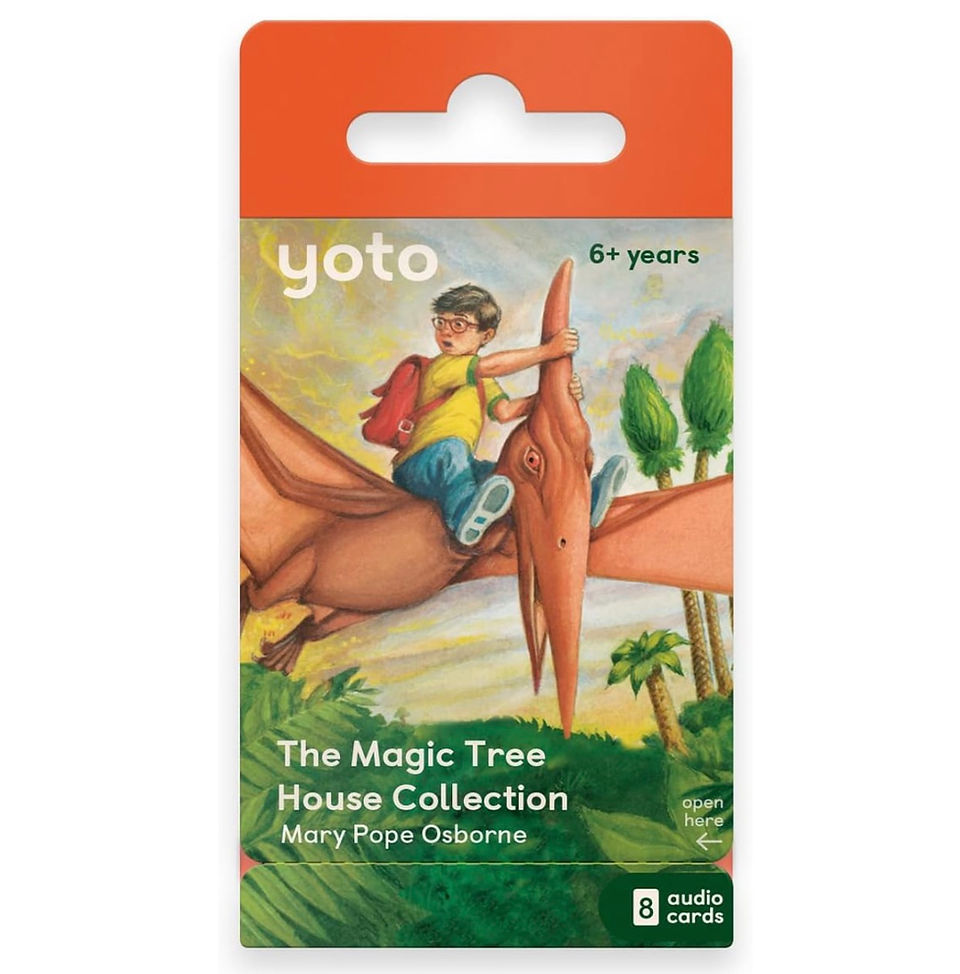
One of the best parts of owning a Yoto is how deep the card catalog runs — there's genuinely something for every kid's taste, and picking cards well is a great way to steer them toward stories and music worth their time. Popular categories to explore on Amazon and through the Yoto card store include:
Classic story collections (fairy tales, Julia Donaldson titles like the Zog & Friends series, Disney and Pixar storybook cards)
Sing-along and music cards (preschool song collections, Kidz Bop-style compilations)
Educational/activity cards (nature and science series like Earth Explorers, complete with quizzes)
Sleep and calm cards (white noise, guided relaxation, bedtime soundscapes)
Blank "Make Your Own" cards for recording your own voice or loading personal audio


Final Comparison Table
Feature | 🥇 Yoto Player | Toniebox |
How it works | Insert a physical card into a slot | Place a figurine ("Tonie") on top |
Best age range | 3–12+ | 1–6 |
Extra features | Alarm clock, nightlight, sleep sounds, room thermometer, Bluetooth headphone support | Sleep timer, wake light (Toniebox 2), soft huggable shell |
Content library | 1,000+ cards: audiobooks, music, podcasts, radio, custom recordings | 200+ Tonies: stories, songs, licensed characters |
Custom content | Yes — record your own voice or upload audio | No |
Content retention if media is lost | Often stays downloaded to your Yoto library | Tied to the physical figurine |
Best for | Growing kids, homeschoolers, families who want one player for years | Toddlers just starting out, sensory/tactile play |
Why we recommend it | Longest useful lifespan, cheaper content, most flexible for reading and learning goals | Easiest, most toddler-proof interaction on the market |
Amazon Rating | 4.5★+ | 4.5★+ |
Check Price |
Our Pick
For most families — and especially homeschoolers who need a reliable, screen-free way to fill in read-aloud time — the Yoto Player is the one to buy. It grows with your kid instead of getting outgrown, it does more outside of story time, and the card ecosystem gives you years of new content to explore.
Ratings and prices are accurate as of publish date but change frequently on Amazon — click through for the current listing before you buy.


Comments